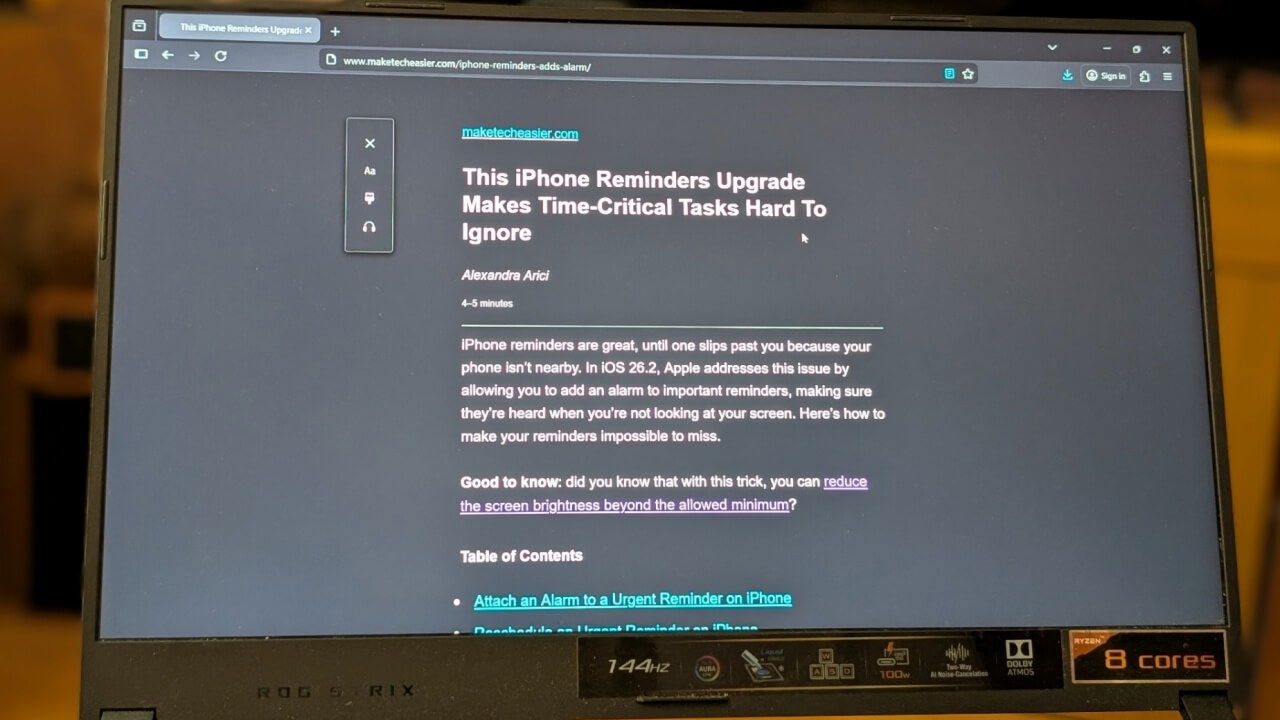
Most browsers today include a Reader mode that distills a webpage down to its essentials, removing clutter and distractions while keeping the text and relevant images front and center. One of its biggest perks is that it also eliminates intrusive elements like ads. What if you could open every webpage in Reader mode by default? As someone who spends a lot of time reading news and long-form articles, I decided to try to this as a way to bring more clarity and focus to my browsing.
Good to know: love to read? You might want to consider getting Amazon Prime Reading.
Force Reader Mode for Any Webpage on iPhone
I do a lot of my reading on my phone, and Safari offers one of the simplest ways to enable Reader mode on all webpages.
Note: some webpages might not support switching to Reader mode by virtue of their more complex layouts or insufficient text content.
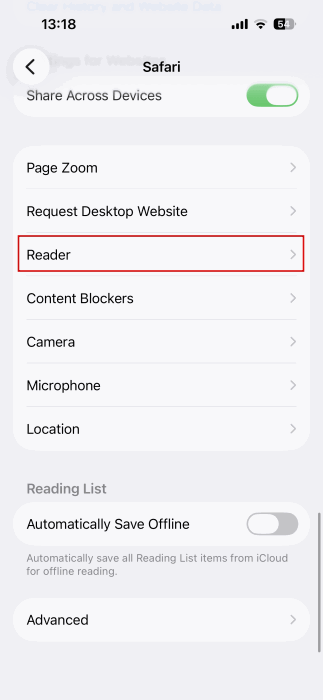
On your iPhone, open the Settings app and navigate to Apps. Find Safari in the list and tap on it. Swipe down towards the bottom of the page until you find the Reader option. Enable the toggle next to All Websites.
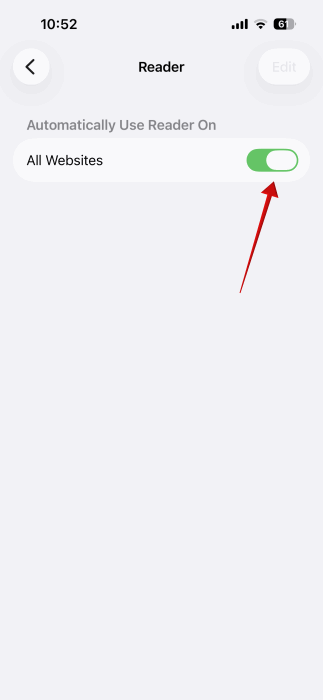
Now go back to Safari on your phone and navigate to a webpage. The standard view will appear momentarily, after which Reader mode will take over. Try navigating to other webpages from there. You’ll see the result is the same.
In case you want to switch back to the normal view, press the blue Reader mode icon that appears in the address bar, and press Hide Reader from there.
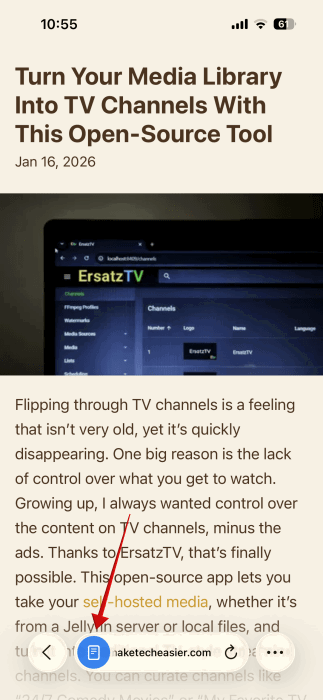
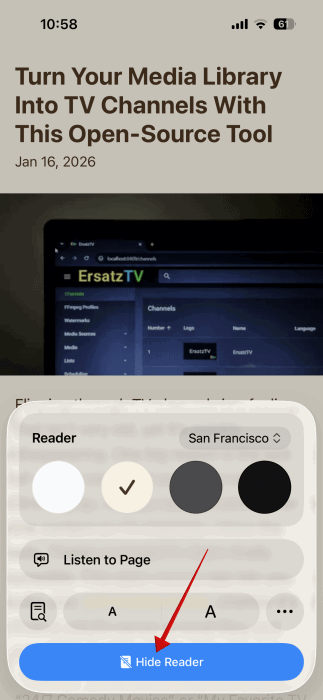
This does not deactivate Reader mode altogether. If you open another page, Reader mode will take over once again.
Force Reader Mode for Any Webpage on Android
On Android, the situation is a bit more complicated. Google allows users to access Reader Mode via Accessibility, but that option currently entails downloading the Reading Mode app on your device first. An alternative solution would be to access it via the individual browsers.
Chrome is the default browser for many Android users. On most devices, Chrome for Android does not offer an easy way to enable Reader mode. However, you can add a shortcut in the toolbar with this easy trick. While it’s not automatic, it makes it a lot easier to switch to Reader mode.
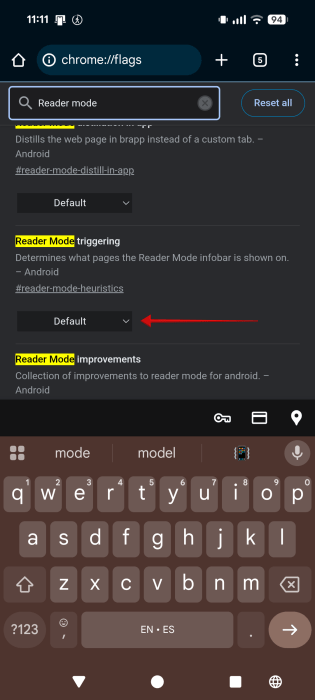
Open Chrome on your device and navigate to this address: chrome://flags and press Enter. At the top, use the search bar and type Reader mode. Find the Reader mode triggering option. It should be set to Default.
Change this to All articles. Then tap Relaunch at the bottom.
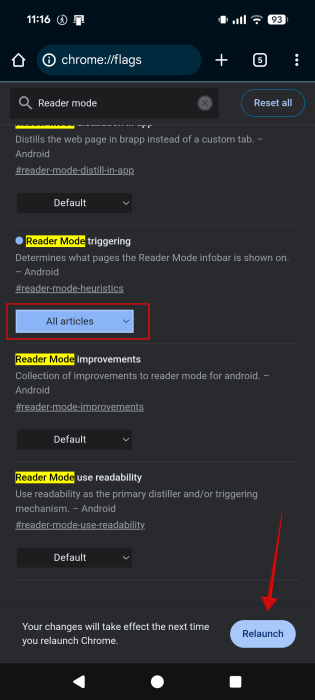
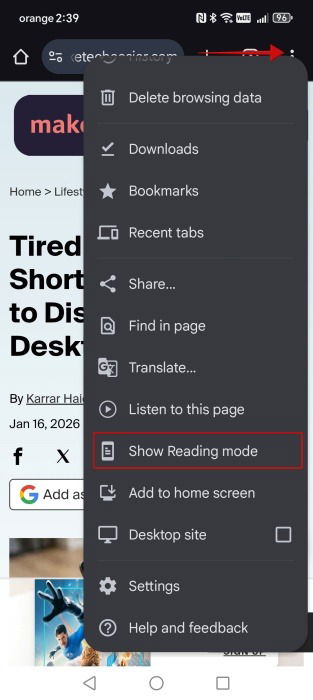
Chrome will open again. Now navigate to a page. You should notice a Reader icon in the address bar now. Tap it to easily switch to Reader mode, which will open in a new window. You can close this anytime you wish to go back to regular mode.
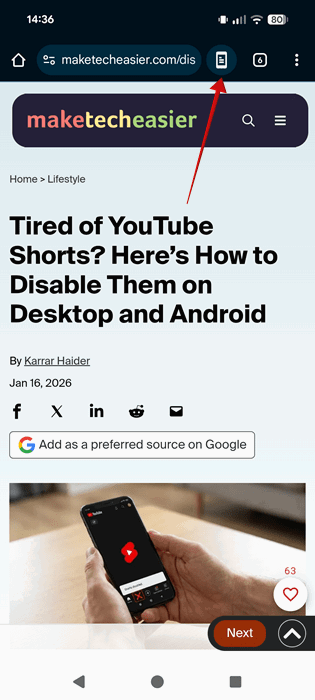
Google appears to be in the process of rolling out a Reader mode redesign for Chrome on Android, which now allows you to trigger it by tapping the three dots in the upper right corner and then selecting Show Reading mode. This option is currently only available on select phones. However, I still find the other solution easier.
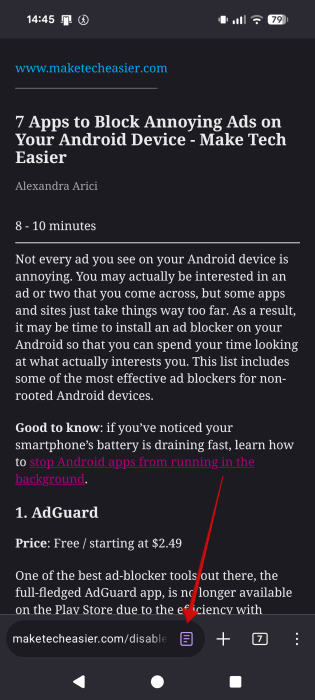
Other mobile browsers, such as Firefox, already have a Reader mode icon in the address bar. You don’t have to do anything to add one.
Tip: looking to upgrade to an AI browser? Strawberry might be your answer.
Force Reader Mode for Any Webpage on PC
If you need to do this on a PC, the easiest way is to opt for a browser like Brave, which offers a native option to do so.
Open Brave on your device and go to Settings. Navigate to Content. Check the Speedreader section and make sure you turn both options on. This enables Brave to open article pages in Reader mode whenever possible.
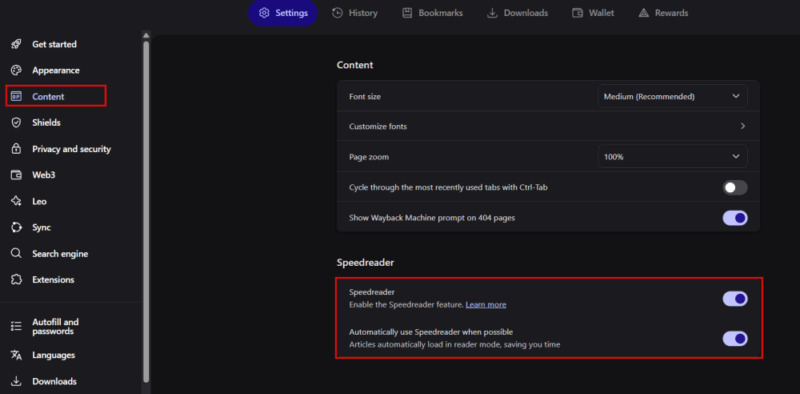
This means when opening articles from sites like CNN, BBC, and similar, Reader mode will go into effect automatically. However, Brave wouldn’t force Reader mode on our own MTE website. Even so, Brave does include a Reader mode button by default in the address bar, so you can enable it manually for articles that don’t switch automatically.

To go back to the standard webpage view, look for the View original button at the top. At the same time, you might be interested to learn how to easily transform Brave into an RSS reader.
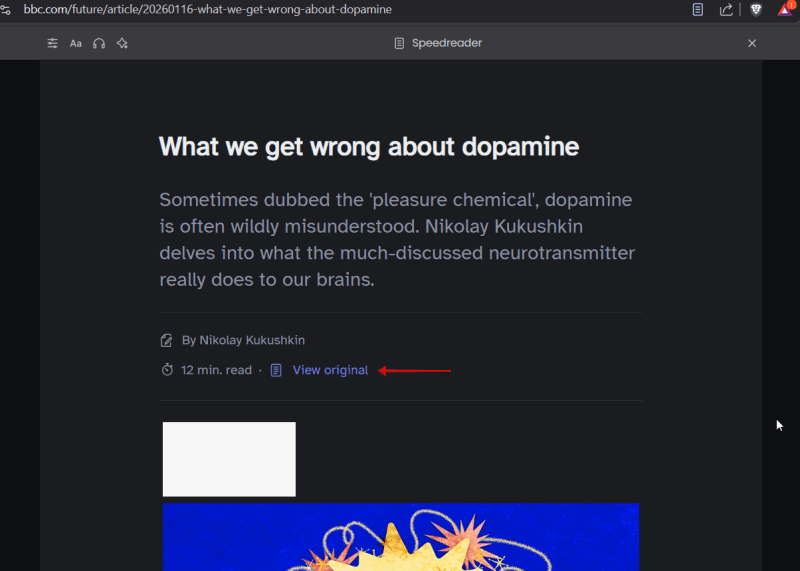
If you’re a Firefox user, then you will need an extension to force Reader mode on any webpage. In my testing, Automatic Reader View worked really well for news sites as well as tech websites as MTE.
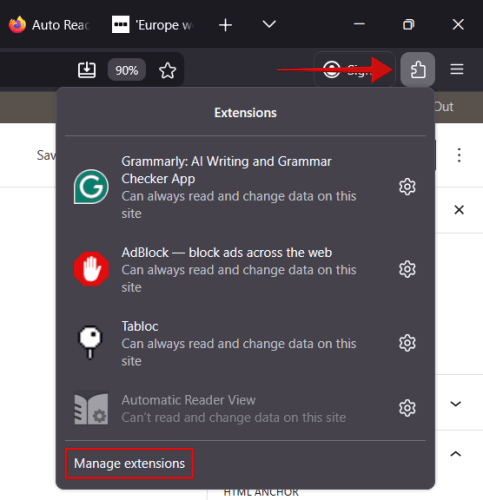
Once you install the add-on, you need to click the extension icon on the upper right and select Manage extensions.
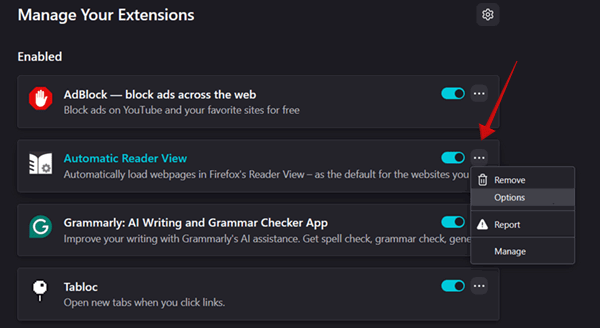
Find the Automatic Reader View add-on and click on the three dots next to it. Select Options.
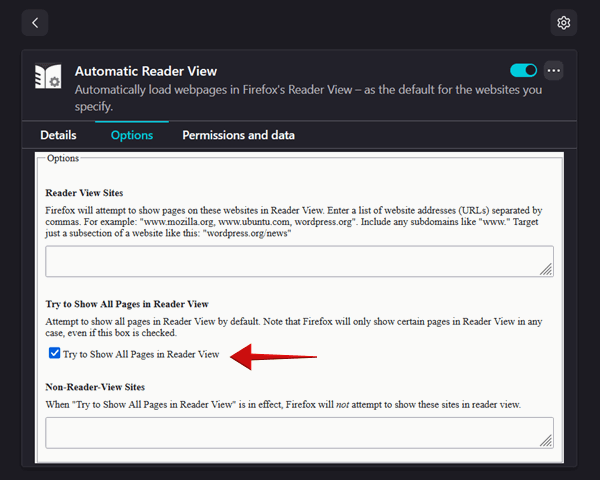
Select the option Try to Show All Pages in Reader View.
To go back to the regular view, click the X button in the menu at the top on the right.

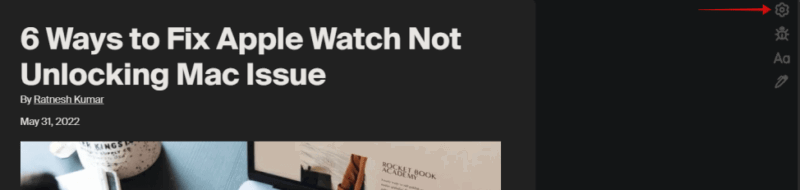
Finally, Chrome users should try installing the Unclutter extension. To make sure all future webpages open in Reader mode, activate Unclutter for a page (by clicking its icon in the tool bar), then press the gear icon in the upper right corner.
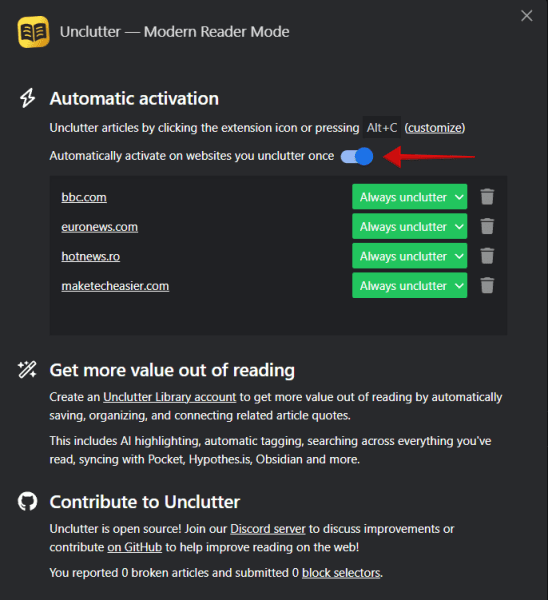
Toggle on the option to Automatically activate on webpages you unclutter once. This means that if you activate the Unclutter button once, every page you open afterward will load in Reader mode.
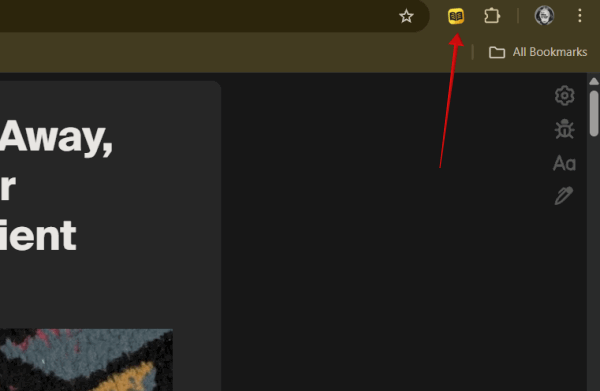
To exit Reading mode, tap on extension icon once again.
On a Mac computer, using Safari, you can enable something similar by clicking the website settings icon and selecting Website Settings. Check the box for Use Reader when available.
No matter where you browse, staying safe online is essential. Here’s how to protect yourself against sophisticated malware like RedTiger, which can steal data directly from your browser.