Years ago when YouTube launched in 2005, everyone mainly watched on desktops and laptops. Then, viewing trends shifted to mobile devices. But now, YouTube is officially a big screen app, perfect for viewing on your TV.
YouTube Most Popular on TVs
For the first time since YouTube launched, more people are watching on TVs than any other type of device. Considering how many people watch YouTube on their phones everyday, it’s kind of surprising. According to YouTube’s CEO Neal Mohan, viewers consumed over one billion hours of video every day on their TVs. That doesn’t include views on mobile devices or computers.
The shift is less surprising when you realize YouTube is the top streaming service. In fact, it’s remained number one in the U.S. for two years now. Thanks to it being part social network and part video streaming service, it offers more variety than traditional streaming services like Netflix and Hulu.
Now, viewers are treating YouTube more like a streaming service, versus a place to consume short clips, as was the practice back in the early 2000s. Plus, higher quality video means content deserves a bigger, better screen than a teeny tiny phone.
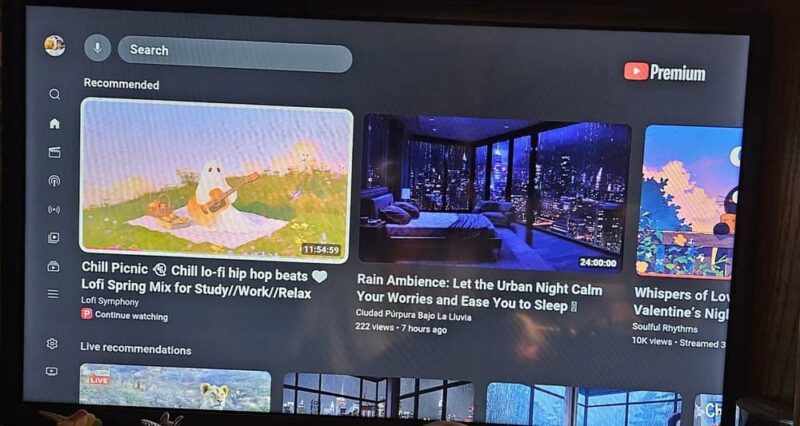
I personally watch YouTube on my TV far more than my phone. I can see more details in videos, let it play in the background, and even use it for soothing sleep sounds. With a little tweaking, I almost always get relevant recommendations, too.
Variety of Features Add to TV Experience
I don’t often chat or comment on YouTube videos, but having the option to link my phone and TV to interact in real time is a nice feature. Mohan credits interactive features added to the TV version of the YouTube app for making it so popular.
I’m able to chat, view comments, and make purchases while viewing YouTube on my TV. And more and more creators are taking advantage of memberships to give viewers exclusive content, which makes the platform seem even more engaging.
Viewers are also consuming more podcasts on YouTube than any other platform. As it turns out, podcasts are better on TVs than phones. Of course, people who are cutting the cord often turn to YouTube’s free movies and TV shows, along with renting or buying premium shows and movies. If you subscribe to YouTube Premium, shows and movies are ad-free.
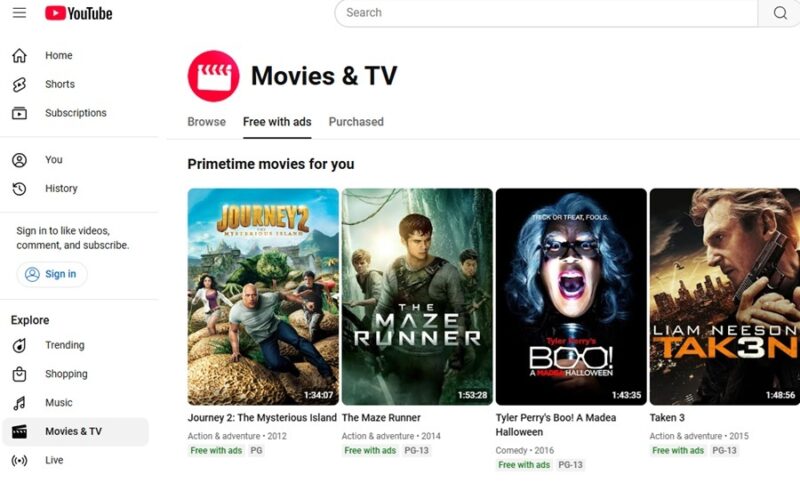
There’s also live sports, news, live streaming, and more. The more you dive in, the more YouTube feels like a TV streaming service, versus just a video-sharing app.
With the addition of AI tools for creators, viewers are getting even more content than before. Admittedly, I’m kind of tired of some of the AI content with people missing fingers or having extra legs, but some AI content is actually well done. Some creators just only use the help of ChatGPT.
The days of YouTube only being for phones is long over. Think of the platform as an interactive Netflix with independently created content, offering unparalleled variety.
Image credit: Unsplash. All screenshots by Crystal Crowder.