
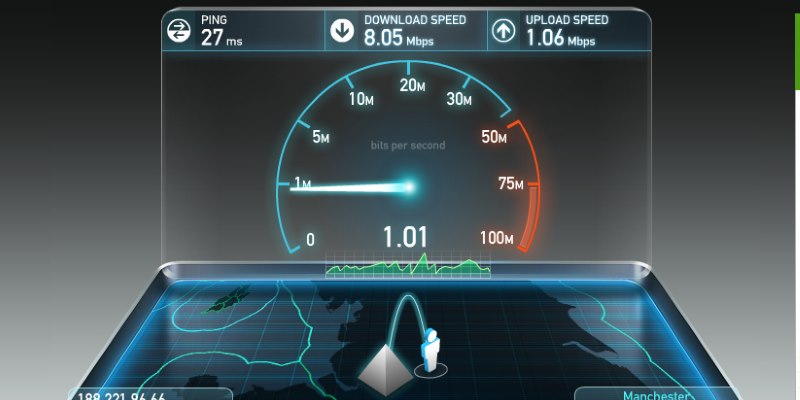

If you’ve been browsing the Web long enough or love playing multiplayer games, you may have come across the term “ping.” You may know already that the lower the ping is, the better your connection is. But what is a “ping” really? What does it mean in the computing world, and why does it have such an odd name?
Where Did the Name Come From?
There are a few theories that “ping” is actually an acronym, and some say it stands for “Packet Internet or Inter-Network Groper.” But there’s nothing really substantial to say it stands for anything.

What everyone does agree on is that its name comes from the sound that sonar makes when it detects another vessel. This is a good term, as it gives a brief explanation of how pinging works in the computing world!
What Does Pinging Do?
When a computer pings another computer or server, it’s trying to accomplish two things. First, it’s checking to see if the computer or server is able to handle communications. Second, if the target is able to communicate, it measures how long it would take to receive a reply.
Checking Server Status

Using ping to check the status of a server is very handy when trying to solve a network problem. Networks are typically made up of a lot of different servers. If one of them goes down or is acting slow, it can prevent you from connecting to the server you want to access. Even worse, there will be very little feedback on which server, exactly, is the one causing the issues!
By pinging from your computer to the target server, you can see the steps your communication takes as it makes its journey. If the communication “trips up” at a specific part, your computer will let you know that the signal got lost. This means you can diagnose what step of the journey has gone bad and can fix the problem accordingly.
Checking Response Time
If the server is already talking to your computer just fine, a ping test can tell you how fast your connection is. This is usually measured in milliseconds, which is why ping usually displays its speed in “ms.” The lower this number is, the faster communications are between you and the server. A ping of 25ms is “faster” than a ping of 120ms, for example.
This is particularly handy in video games where every player is talking to a central server. The server stores all of the information about the current game and tells the players what’s going on. The players respond by telling the server what moves they’d like to make.
If the ping is too high, your computer takes a while to send and receive information from the server. This means the player won’t transmit their moves before the other players, and they’ll see things happening later than the other players. This then creates an undesirable game state where people with high pings can’t react to what’s going on in the game as fast as the other players.
A Thing About Ping
While you may have already known that low pings equal better connections, what a “ping” actually is isn’t so obvious. Now you know what a ping is and why it’s important in computer networking.
Have you ever pinged a server to check for network issues? Let us know below.
Image Credit: Dunk