
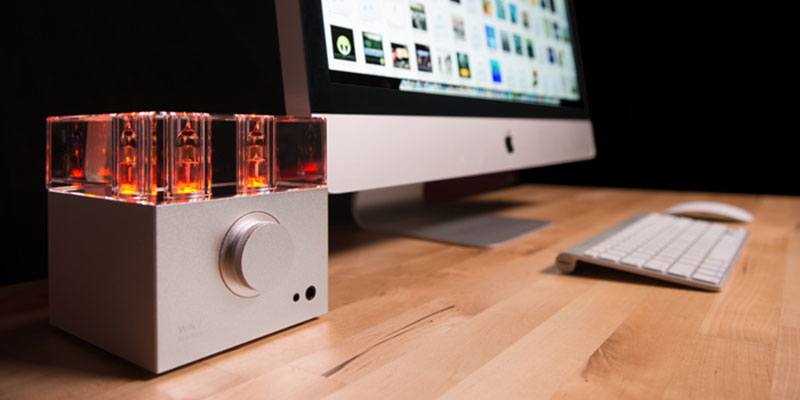

While most users don’t notice, audio output on laptops and desktops can be a little disappointing. There’s a number of elements that contribute to this problem, and one factor is the digital-to-analog converter, or DAC. This integrated circuit isn’t the only element of poor digital sound, but it does play its part.
If you are a user that notices or cares, then the disappointing audio on many machines can be a bit of a buzzkill. And while it’s not the first thing you should upgrade to get a better listening experience, adding higher quality elements to your signal chain is generally a good way to improve your listening experience. To that end, you can purchase an external DAC which takes the place of your built-in processor and includes better hardware.
What does a DAC do?
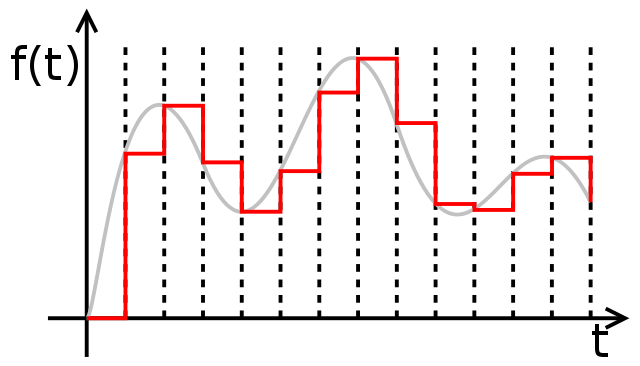
A DAC is responsible for converting the string of digital bits that make up a digital audio recording into analog sound waves. It does this by converting the binary representations of sound contained within an audio file into a continuously-varying electrical signal, as seen in the simplified graph of the process above. That’s then transported to an amp. The amp boosts the signal and passes it off to your output device. Your speakers then turn that electrical signal into sound using the principles of electromagnetism.
Why are built-in DACs bad?
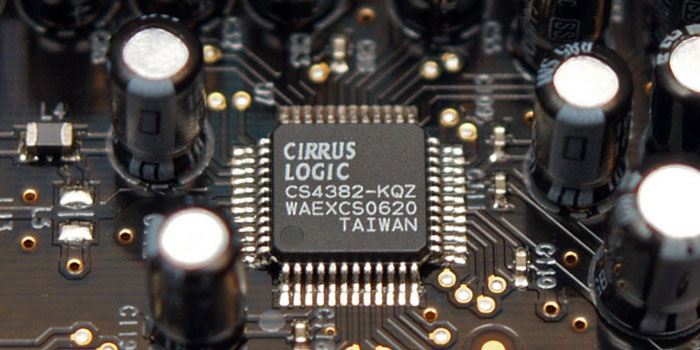
They’re not always bad. Built-in DACs range from serviceable to awful, and for many uses the built-in DAC is perfectly fine. But a consumer computer is a collection of compromises. Between weight, power consumption, heat, and component cost, manufacturers have to make some tough calls in regards to what to include and what to leave out. And since few users will notice high-fidelity audio reproduction, manufacturers don’t bother to include a high-quality DAC chip.
But even low-quality components can do a decent job. The single biggest problem faced by on-board DAC chips is electronic noise. Whether mounted on the motherboard or stuck to a PCI sound card, the DAC is within spitting distance of some very loud hardware. The electronic noise from the CPU alone is significant and often a complicating factor.
What makes an external DAC better?
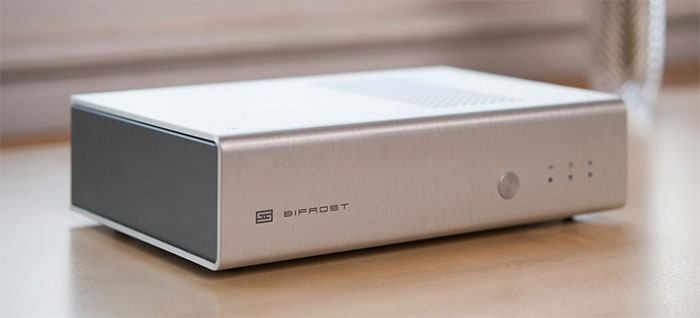
There are a couple factors that contribute to the improved sound you’ll get from an external DAC. The most prominent is reduced digital noise from surrounding hardware. Better components also play a role. External DACs use higher-quality chips for the conversion process. These offer higher bit rates, better accuracy, and improved functionality. Most external DACs also include superior technical designs, better maintained fidelity of the original signal and reduced extraneous noise.
Some DACs also include their own amplifier. These are more powerful than built-in amps and can also offer a big improvement in sound reproduction. An underpowered built-in amp can lead to all kinds of noise in the signal chain when paired with outputs that expect a strong signal. Most audiophile-level gear is going to expect a fairly powerful input, so upgrading your built-in amp can improve your results. Even basic gear can sound better with a more powerful amp, but distortion becomes a concern.
Something as simple as offering a wider variety of output options is important, too. Many DAC/amp combos include a 1/4″ output for studio headphones, optical outputs, and stereo RCA jacks for line-level output.
Conclusion
The average user probably wouldn’t notice much of a difference between a built-in DAC and an external DAC. However, audiophiles with the right equipment will probably appreciate the greater sound fidelity provided by an external system. You can spend tens of thousands of dollars on a luxury-grade DAC, but even a $100 external DAC/amp combination will likely improve a laptop’s sound in a noticeable way.