


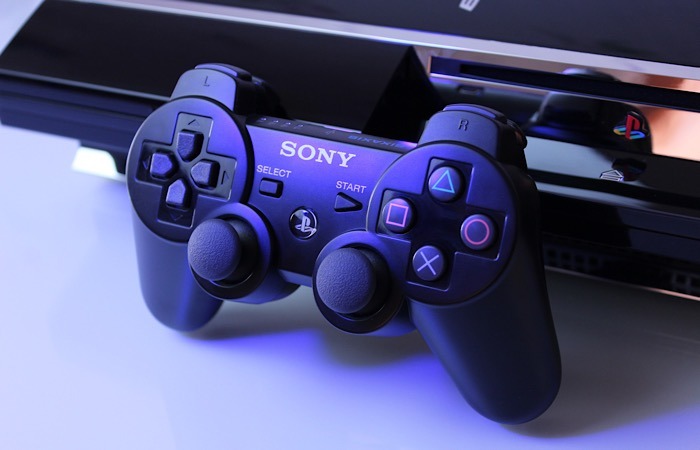
Are you a Sony gamer? If so, you’ve been waiting for the next PlayStation release for quite some time, but you’ll have to wait at least another year. Sony revealed a few details of their next-generation game system, just to whet everyone’s whistle a little bit, including 8K graphics, 3D audio, speedy SSDs, and backwards compatibility.
PlayStation 5 Details
It’s been a long wait. Sony’s PlayStation 4 was released in November 2013. Fans are looking for the next version to feed their gaming habit. The tech company was interviewed by Wired and gave just enough details to make everyone salivate but certainly not all the details. They didn’t even reveal what the name is going to be, but the assumption is that it will be the PlayStation 5 to stick with their naming standard.
The lead system architect for PS4, Mark Cerny, said the next version isn’t just an upgrade of a few specs like the PS4 Pro was – the new version will consist of entirely new hardware that will include an eight-core CPU based on AMD’s third-generation Ryzen line built on the latest 7mm Zen 2 process and will have a custom BPU based on AMD’s Radeon Nav hardware.
For the first time this will bring ray-tracing graphics to a gaming console. This next version of PlayStation 5 will support 8K graphics, as long as you have a television that can support 8K as well.
The audio receives an upgrade as well to 3D. The AMD chip will include a custom unit for 3D audio, which Sony is hoping will bring a more immersive gaming experience output to both speakers and headphones.
The hard drive in the next PlayStation version will be replaced with an SSD. Sony is vowing that it will support an improvement on load time and gameplay, more so than anything that a hard drive could deliver. Wired described that fast-traveling on Spider-Man for the PS4 took 15 seconds, but on an early devkit for the next version, it only took 0.8 seconds.
That brings up another positive with the next generation of PlayStation. Despite all these advancements, it will be backwards compatible with PS4 games, meaning you won’t have to buy all new games. Physical copies of the games will still be available with output not just reduced to downloads. Additionally, new games will be released for both the PS4 and “PS5,” at least initially.
The current PSVR headset will continue to work with the next version as well, but Sony is tight-lipped on whether it will release a new-generation headset along with the new system.
Release Date
Cerny would not commit to a release date, He would only say that it will not be out in 2019. However, developers already have access to devkits, meaning it can’t be too far off. Previous rumors have stipulated that it would be mid-to-late 2020 and in time for the 2020 holiday season.
Do you think you can wait another year or so for the “PS5?” Or is that too long to wait? Are these details in line with what you’ve been expecting? Tell us what you’ve been waiting for in a comment below.