

It may have seemed like an easy decision when the European Commission decided that companies like Apple, Amazon, and Meta shouldn’t preinstall or push their own services, such as browsers. But the line between violating the Digital Markets Act and fair practices is a muddy one. While Microsoft is included in the list of companies the commission called out, the DMA is not stopping Microsoft from preinstalling Edge on devices.
FYI: check out these free ad blockers that work well on Chrome.
Vivaldi and Others Believe Edge Should be Part of DMA
While Microsoft is included in the 22 companies that the European Commission decided has an unfair advantage in the tech marketplace, it exempted the Edge browser from complying with the DMA. Vivaldi, Waterfox, Wavebox, and the Open Web Advocacy sent a letter to the commission pleading their case.
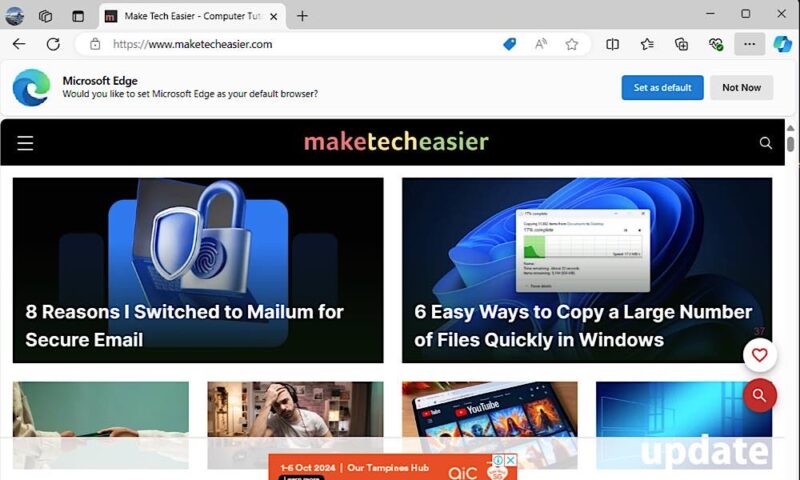
Truthfully, this isn’t the first time the European Commission has heard this. In July, the company behind the Opera browser filed a lawsuit against the commission for providing that exemption.
You have to understand that. When you buy a computer with Windows 11 on it, Microsoft graciously adds Edge, just like Google and Apple add the Chrome and Safari browsers, respectively. Do some people not even bother downloading Opera or Vivaldi and just use the defaults? Of course!
Smaller Browsers Make a Plea to the European Commission
In the letter that these smaller browsers sent to the European Commission, they did so in support of Opera’s court case against the commission. They are demanding that the commission reconsider the exemption that it gave the Edge browser, as it’s the default browser on every Windows PC.
The companies behind Vivaldi and the other smaller browsers called out the commission’s “unfair practices,” as there are plenty of choices in browsers, but users have to take that extra step to find the choices. They believe independent browsers don’t stand a chance compared to Edge.
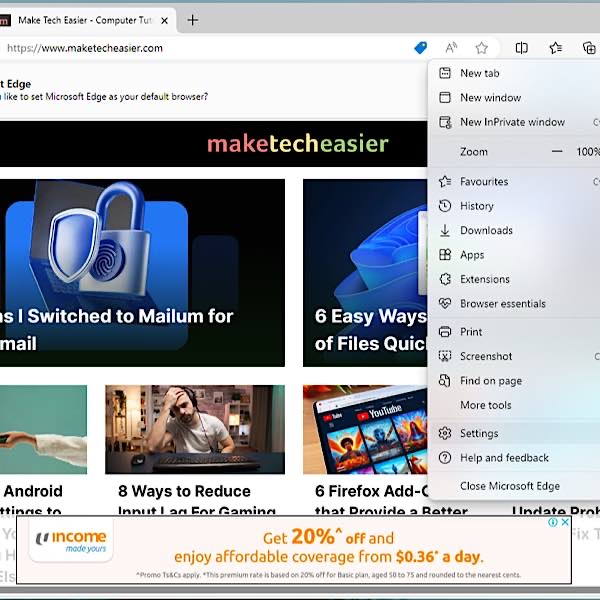
Reading excerpts from the letter sent to the European Commission, it certainly sounds like they have a case. However, if you look at market share, you can see why Edge wasn’t included. StatCounter puts Chrome at 66% of the market, while Edge is only getting 5% – and that’s with the help of Microsoft making it the default browser. Read on to learn why one of our writers uses Opera over Edge and Chrome.
But along with Edge being the default browser on all Windows PCs, the small browsers also contend that Edge pop-ups mention the features of other browsers unfavorably and aren’t completely honest about them.
In the end, it comes down to you, whether you, as the user, just use whatever browser you have on your machine, or whether you search out the one that will provide the best features. If you’re wishing that Edge was a little more feature-rich, find out how to use Chrome extensions on Edge and further customize it to boost your productivity.
Image credit: Canva. All screenshots by Laura Tucker.