
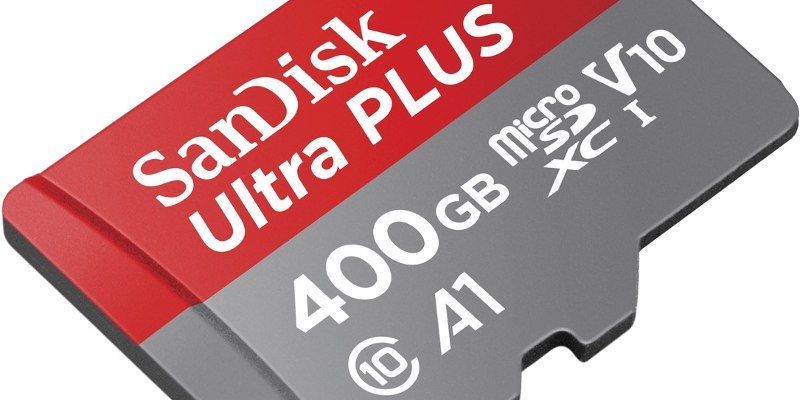

On 31 August 2017 SanDisk announced a massive storage capacity microSD card, capable of fitting 400 GB of data onto it. That’s right! A memory card the size of a penny can cram an incredible 40 hours of raw 1080p video, something that was absolutely incomprehensible to technology experts a mere decade ago. But is this really the upper limit? Have we reached peak memory? Or can we fit even more into this tiny 5-square-millimeter space?
A Theoretical Problem
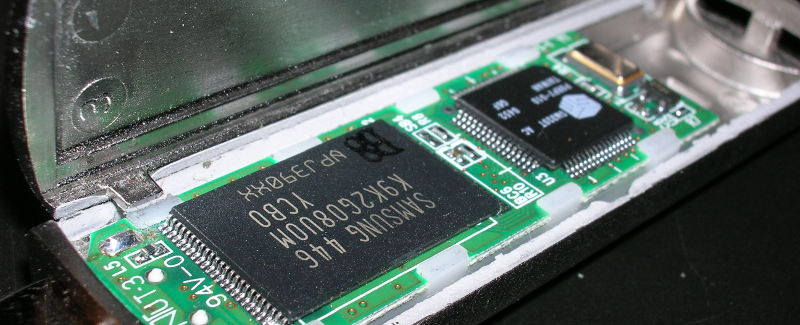
A half a centimeter doesn’t give you a whole lot of space, and devices that are manufactured for microSD cards cannot be repurposed to fit something else. This means that you’ll have to work within these constraints. Usually, card manufacturers like SanDisk would shrink the size of their transistors so more of them fit into the tiny space. In 2013 this size was roughly 19 nm. One sheet of these transistors within a half-centimeter space would yield 8 GB of storage space, which was plentiful for most small-scale consumer devices.
To make more memory fit into the same amount of space, you would need to stack the transistors on top of each other, creating transistor layers that would double or quadruple the amount of storage space available to you. That is how microSD cards with 32 GB capacities began to appear. There comes a point in time, though, where things get a little too cozy and you have to start eating at the frame to fit more layers.
At the 19 nm level, you would need eight layers of transistors to fit 64 GB of memory. To fit 400 GB, you’d need exactly fifty layers. While this is theoretically possible, it’s extraordinarily difficult to do in such a confined space.
When There’s No Choice But to Double Down
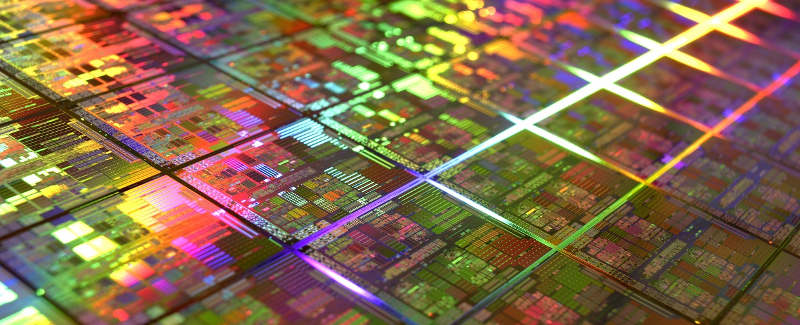
We already discussed the fact that it’s just not feasible to change the dimensions of every slot on every device to fit a bigger card. The only option left is to dive even deeper into microtransistor manufacturing technology. We have to make them smaller!
Theoretically, a transistor could be as small as a single molecule. On the 14th of August, we’ve actually managed to make single-molecule transistors that operated sustainably at room temperature. Because the process of making these is so convoluted, we can’t expect them to go mainstream anytime soon, but it presents a window into what the future looks like. We may soon see transistors measuring as little as 5 nm.
Remember, transistors fit in a three-dimensional space, meaning that as you make them smaller, you also get more space to stack them. This is what must have happened for SanDisk to be capable of creating a 400 GB microSD card. Under the 10nm transistor specification available to manufacturers as of 2017, you can fit 400 GB of memory using 25 layers of transistors that can now fit roughly 16 GB per layer.
With 5nm transistors, we could end up creating microSD cards that fit a terabyte of memory, which is roughly where I see the limit. We might not be able to surpass that level and probably won’t even need to for the foreseeable future.
Do you see any need for more than 1 TB of memory (let alone 400 GB) in a microSD format? Tell us your thoughts in a comment!