


When you think about satellites and Internet, Elon Musk’s SpaceX Starlink satellites are probably the first things that come to mind. Thanks to the recent contract for IRIS² in Europe, Starlink may soon have serious competition.
Starlink Currently Controls Most Satellites
While Starlink satellites have been beneficial in numerous ways, Musk’s project isn’t always perfect. Plus, it’s become a monopoly, with approximately two-thirds of all satellites belonging to Starlink. Musk has even stated nearly 90 percent of satellite Internet traffic in 2025 will be from the more than 6,000 Starlink satellites in space.
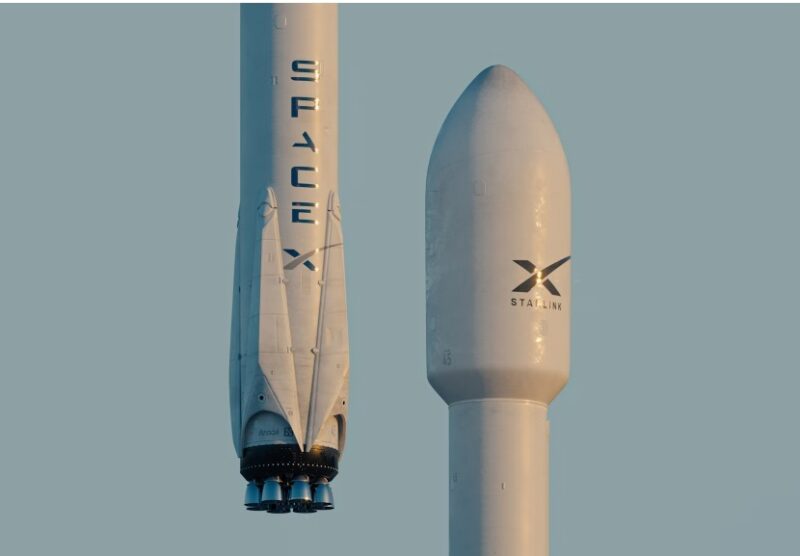
The FCC (Federal Communications Commission) is growing tired of a single company controlling so much Internet traffic. The FCC wants to see far more competition in the satellite Internet market to help lower prices for consumers and help spur better innovation in the industry.
IRIS2 Enters the Ring to Battle Starlink
IRIS2 (Infrastructure for Resilience, Interconnectivity and Security by Satellite) will start as a system of 290 satellites utilizing both Low Earth Orbit (LEO) and Medium Earth Orbit (MEO) satellites. It was developed by and for the European Union to offer more secure and reliable Internet to governmental agencies.
However, it’s not going to be limited to just the government. It will also be available to businesses and citizens throughout the EU and all Member States. It’s the EU’s solution to broadband dead spots and security issues.
The EU Commission officially signed the concession contract with the SpaceRISE consortium to implement IRIS2. SpaceRISE is comprised of three major European satellite companies, including Hispasat S.A., Eutelsat SA, and SES SA, along with notable satcom contractors.

By establishing an entire ecosystem of satcom companies, the goal is to encourage even more innovation, unlike Starlink. The project even has both private and public funding.
Currently, the contract lasts for 12 years, with the EU hoping to see IRIS2 providing major progress and connectivity in dead zones and rural areas by 2030. As studies have shown, Internet access actually boosts well-being.
Europe Could Become Next Satellite Connectivity Giant
I know 290 satellites doesn’t sound like much compared to the Starlink’s thousands, but Starlink didn’t start with that huge of a number. At the moment, it definitely feels like a monopoly in the industry.
Despite how useful Starlink has been, including helping those in my own home state of North Carolina after Hurricane Helene devastated the western counties, it could use some serious competition to encourage more innovation. Plus, satellite connectivity shouldn’t be limited to a single entity. Consumers deserve options, including more competitive pricing.
With Europe stepping in with the IRIS2 satellite constellation, it proves other countries aren’t willing to simply rely on Starlink for everything; they want to create their own technology. As a result, I could easily see other countries developing their own versions.
Will IRIS2 come to the U.S.? Possibly, but don’t expect it anytime soon. I’m sure Musk will fight to prevent that from happening, similar to his threat to Apple over ChatGPT, but I suspect more exciting news in the satellite Internet niche could be right around the corner.
If you aren’t fond of monopolies either, consider these Google search alternatives to move away from the search giant.
Image credit: Unsplash