

The fact that a company knows your location over the Internet is just a fact of life unless you are connected via some sort of proxy and block JavaScript code that might bypass it. Despite the fact that you can’t ever hide (barring the use of TOR or VPNs) from the services you come into contact with on the Web, it’s still useful to know the methods that they can use to track your location. This kind of knowledge, in the end, will empower you to make better decisions about your privacy.
Your Router’s IP Gives It All from The Get-Go
It shouldn’t be much of a surprise to you that your IP can tell someone a lot about your location. In some exceptional cases, an IP address can give away the whereabouts of a device as accurately as GPS can. Internet service providers will often associate a range of addresses with one particular “sector” in their coverage area.
Although no one would be able to find your street address this way, it’s an easy way for advertisers to cater the ads you see to your region.
In the worst case scenario you’ll only be able to find out someone’s country through their IP. But that is still enough information for Google to know what language you speak, what TLDs (e.g. “.ro,” “.nz,” “.pl”) you’d prefer to see in search results, and how your ads should be displayed on websites that you visit and apps that you use.
GPS Will Pinpoint You Even When You Don’t Explicitly Let It

Apps often give you the option to disable GPS location tracking, but that doesn’t mean they won’t just go ahead and peek into your antenna anyway. If your antenna itself is enabled on your phone, expect at least one or two applications to occasionally turn it on to get your current location.
An application that has a built-in “disable GPS tracking” option can just ignore this whenever it wants. If you want to be certain that you’re not being tracked, you have to disable the antenna itself on your own.
GPS data is sometimes useful to companies that are attempting to understand where their users go during the day. By understanding their typical users’ schedules and movements, developers can better anticipate their needs in some context.
Your Cellular Antenna Also Gives You Away
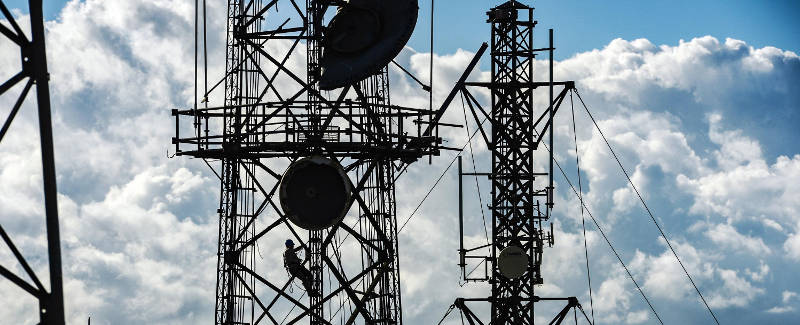
If your phone has a SIM card in it, it’s always connected to a cell tower within 45 miles (~70 km). Once an app has the identification number of that tower (its cell ID), it already has an idea of where you are in the world. This can get more precise by querying other data such as the signal strength and the “round-trip time” of data exchanges between the device and the tower. A company could theoretically narrow your location down to a 15-meter radius using this method. This is also true of governments that use IMEI tracking.
If you use mobile Internet through your cellular carrier, you’re constantly sending signals to its tower, making it immeasurably easier to track you down. Disabling your cellular antenna would make your phone unable to send and receive calls or SMS messages, so there’s not really much you can do here.
In this particular situation, the only solution would be to get a “dumb” phone that has no modern applications installed on it.
What do you do to protect your location privacy and/or minimize the amount of geographical data you send? Tell us all about it in a comment!