
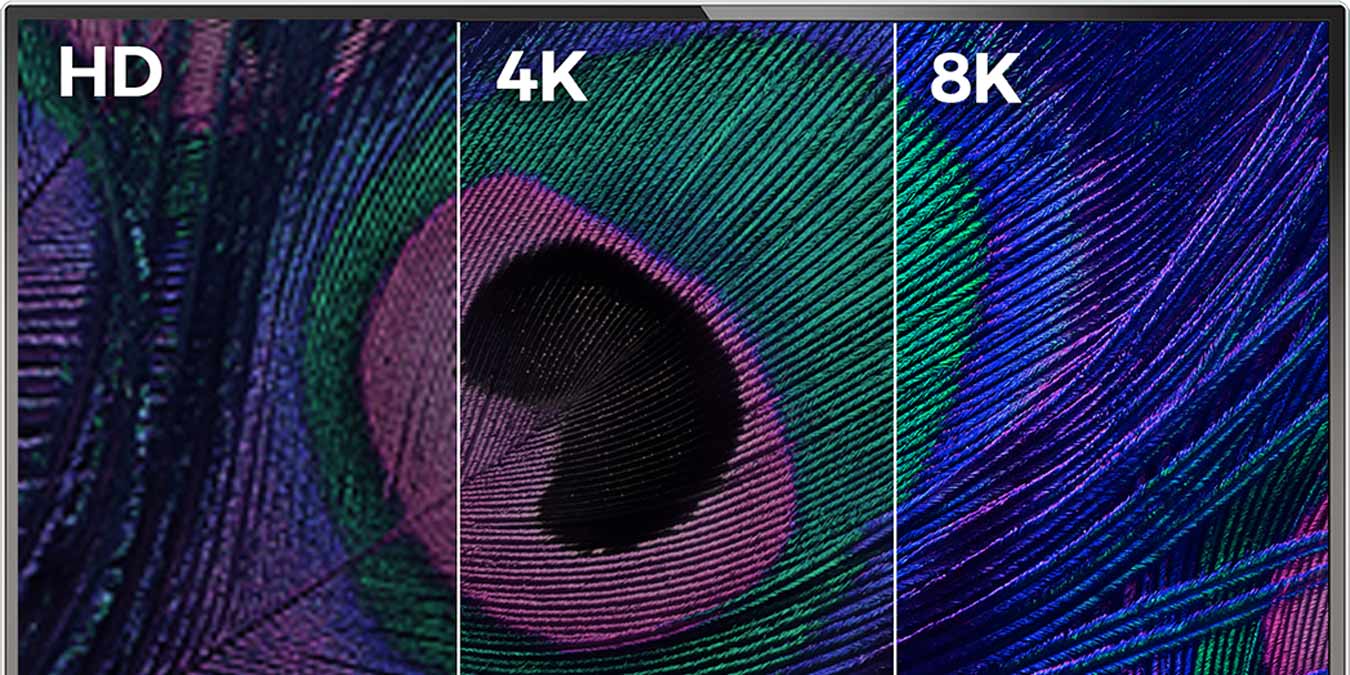

Also known as Versatile Video Coding (VVC) and MPEG-I Part 3, H.266 is a video compression standard designed for the newest generations of high-resolution video. It’s a successor to the widely-used H.265 codec (also called MPEG-H Part 2) and offers some major improvements over that now-aging compression scheme.
H.266 was developed by the Joint Collaborative Team on Video Coding (JCT-VC), a group of video coding experts that started working on the compression standard back in 2010.
Also read: How to Send High-Quality Videos on WhatsApp
Why Is H.266 Better than H.265?
The H.266 codec offers some major improvements over the H.265 codec, which was first developed in the hazy days of 2013. There are far more improvements that we can cover here, but these are the highlights for consumers.
Better compression
H.266 offers massively improved compression over H.265. The newer codec can achieve about 50% more compression than its predecessor. With H.266, a video of the same apparent visual quality would take up only half as much space.
Alternatively, a video of the same file size and bit rate could be significantly better looking. Part of this improvement comes from an increased macroblock size. H.265 allows for 64 x 64 pixel macroblocks, while H.266 provides for 128 x 128 pixel macroblocks (now called coding tree units or CTUs), allowing for greater encoding efficiency at all resolutions.
Improved intraframe prediction
Video compression relies on predicting motion between frames. When there’s no change in a pixel, a video codec can save space by referencing it rather than reproducing it. Improved motion prediction means improved file size and compression quality.
Alongside the improved compression standards in H.266, we also find major improvements in motion prediction and compensation. While H.265 had 35 intra prediction modes, H.266 has an impressive 67.
Improved interframe prediction
H.266 brings with it some impressive new tools to improve interframe prediction, which allows for higher compression rates by essentially working out what the next frame will look like based on its preceding frame.
H.266 improves over H.265 by accommodating an MV resolution as granular as 1/16 luma-samples compared to the 1/4 offered in H.265. It’s all very fine stuff, but it’s essentially refining the compression process.
More Complex Encoding
It’s not all fun and games for H.266. Yes, it offers considerably better compression than its predecessor, but it’s also significantly more complex to encode and a little bit more complex to decode. What does this mean in real terms? It means the process of encoding and decoding takes quite a bit longer, which makes it a less attractive proposition for operating systems and other software to take it on.
Better Support for Modern Video
The world is becoming higher-res, and H.266 supports that. With H.266, video can be encoded at up to 8K UHD or 8192 pixels × 4320 pixels. Currently, only a handful of cameras can even produce 8K video, and very few monitors can display that kind of resolution. H.266 also has dedicated support for HDR video and 360-degree videos – two vital modern techs that weren’t specifically supported by H.265.
Where Is H.266 Found?
H.266 is still less common than H.265. For now, Apple’s iPhone and iPad operating system, iOS, still stores all video files in H.265. Microsoft, meanwhile, seems to be more interested in the royalty-free Aomedia Video 1 (AV1) codec, and late last year rolled out support for it. AV1 isn’t as effective at compression as H.266 but isn’t as locked down when it comes to license fees and patenting.
One thing’s for sure: H.266 hasn’t had quite as smooth a ride in terms of adoption as its predecessor. Despite the impressive tech on offer, only time will tell whether it’ll become the dominant global video compression format.
Also read: How to Compress Videos on Your iPhone
For more explanatory guides, see what all this fuss is about with Nvidia’s DLSS, which is capable of drastically increasing your gaming frame rate without overheating your PC. And for something a little less brainy, see our list of the best Windows 10 easter eggs!