


If you enjoy personality quiz apps on Facebook, you may find those being much more limited in the future. You may not be able to sign on anymore and find out what you will look like in thirty years or what famous movie star you most look like now.
But the good news is it may lead to more safety for you. Facebook released the news that they will be scrutinizing personality quiz apps more. There won’t be as much access to them anymore, as they are focusing more on apps that “enrich” the user experience.
Facebook Limiting Personality Quizzes
Perhaps Facebook is realizing personality quizzes are the beginning of recent troubles. It all goes back to the Cambridge Analytica scandal. This was the company whose personality apps were in use on Facebook during the 2016 United States presidential election. It was discovered that these personality quizzes were used to gather customer data to send pointed political ads.
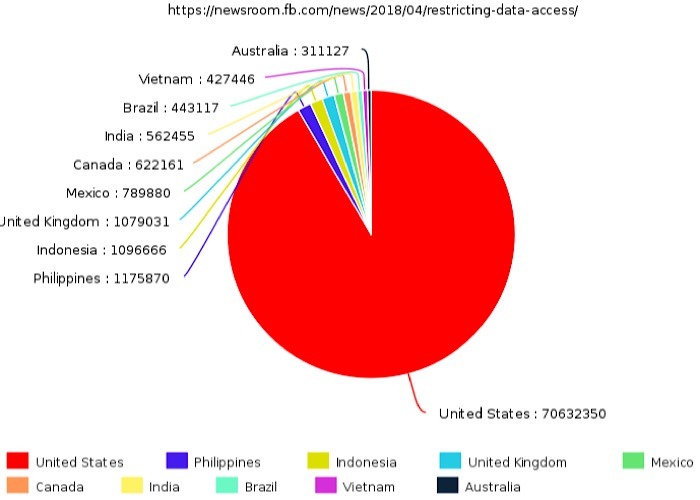
Facebook users were shocked the social media company used them in this way. After this it seemed like every week it was being discovered that Facebook was playing fast and loose with a lot of their customer data. It seemed to be neverending.
Now that the bandaid has been ripped off, exposing them, Facebook is now trying to control the pain and the bleeding.
They announced this change is part of their “ongoing commitments to privacy and security.” They will be “removing access to a number of APIs, updating our platform policies, and regularly evaluating an app’s access to user permissions.”
If you’re enjoying sharing all those quiz results with your friends on Facebook, you have just a few short months left to do so. Those apps that fit within a certain API will no longer have access to Facebook after July 30, and starting April 30, new apps will be allowed to have that access.
They’re also helping you out by clearing out some of those apps you haven’t seen or heard from in a while. When you take one of those quizzes, you give them access to log in to your Facebook, but then you never use the app again. So Facebook is removing those apps for you that you haven’t used or accessed in the past 90 days.
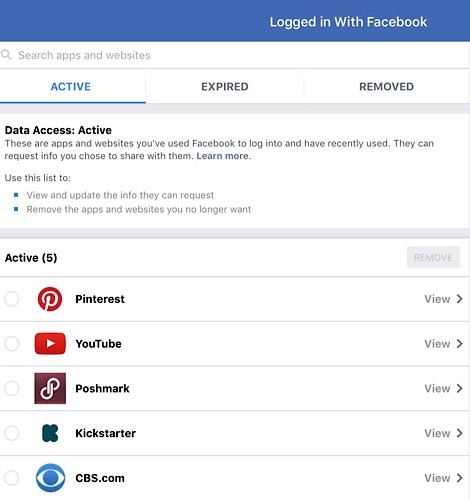
When you sign in and go to “Log in with Facebook” in the settings, you’ll see three tabs: Active, Expired, and Removed. These will show the apps you still show as active, the apps they determined have “expired” and haven’t been used, and the ones you have removed yourself. Magically, I now only have five apps open after seemingly having hundreds previously.
Facebook also announced they will be updating their policies in the coming months and in utilizing developer feedback, will be “moving toward a more streamlined and straightforward experience for developers and eliminating the need for certain supplemental terms.”
What This Means for You
For right now, this can only be seen in positive terms. Right now, today, the apps have much less access to you. If they have been forgotten by you, they no longer have access. If future apps don’t do much for the user experience, they may not ever show up on your wall or your friends’ walls again.
But is this a little too little, a little too late? Has the ship already sailed for Facebook? Add your thoughts in the comments below and let us know how this Facebook change with regard to personality apps will affect you.