


Bluetooth has been with us since the early days of wireless technologies in computers and mobile devices. First announced in 1998, the technology made its way to consumer devices in 2000 by way of the Ericsson T36 mobile phone.
With each new iteration, Bluetooth has been making it quicker and more convenient for us to connect various devices to each other – laptops, headsets, mice, fitness bands, you name it – and do even more advanced things like transfer files and share Internet connections.
Now, Bluetooth 5.0 has been announced, and it’s set to be quite possibly the biggest advancement to the technology yet. Here’s everything you need to know about it.
What’s New?
Firstly (and most importantly), Bluetooth 5 is super speedy. It’s expected to be about twice as fast as the previous version (Bluetooth 4.2), thanks to a 5MBps bandwidth in comparison to the 2.1MBps bandwidth of Bluetooth 4.2. The improved data capacity means we can expect packet transmission to increase to 2MB/s, where it was 1MB/s before.
Device manufacturers and developers will have more flexibility because they can increase the range of Bluetooth signals by decreasing the bandwidth – up to distances of nearly a mile if there aren’t any obstacles in the way. That’s a huge jump on the current 200m range of Bluetooth 4.2.
Bluetooth was a little bit confusing before because it came in standard and ‘LE’ (Low Energy) variants. Bluetooth 5 will unify both those things into one, with Bluetooth SIG (a body of around 30,000 companies that develops and oversees the Bluetooth technology) claiming that the new standard will be a lot more powerful while, paradoxically, not using any more power at all.
What Devices Will We See This In?
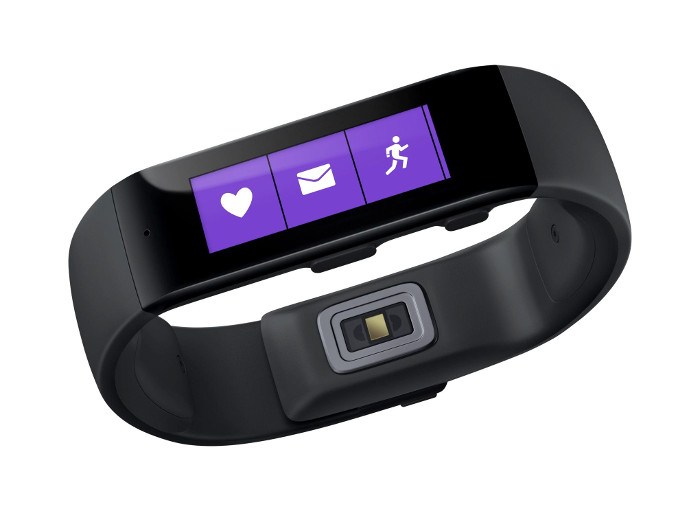
Everything eventually, though expect Internet of Things devices to be on the front line. Fitness bands, smart lighting systems, smart thermostats and so on will particularly benefit from the increase in broadcast capacity that will make it functionally not so different from Wi-Fi, which is still the IoT tech of choice for most companies.
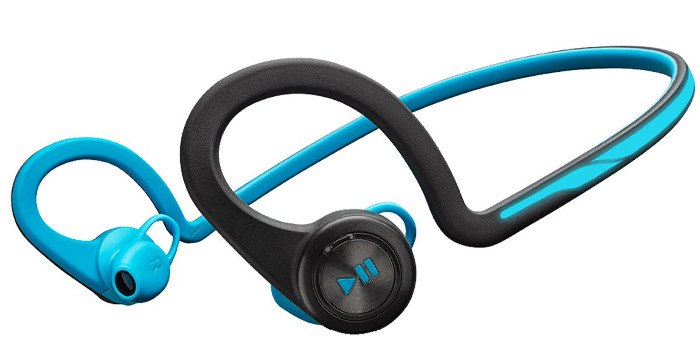
Audio devices like speakers and headphones have had a volatile relationship with Bluetooth so far, largely because it uses the 2.4 GHz band, which is the most popular band for wireless consumer technologies, and as a result tends to suffer from data loss – which is particularly noticeable when you’re trying to listen to pitch-perfect music.
While Bluetooth 5 isn’t switching bands, it promises to use broadcasting channels within it more effectively, which in theory should offer higher audio quality. Let’s not count our chickens just yet though …
Will Bluetooth 5 Devices Work with Bluetooth 4 Devices?
Yes, Bluetooth 5 will be completely backwards compatible, and while you won’t experience its various benefits if you use BT 5 with BT 4 devices, it will still be fully functional as a BT 4 device. However, there’s no way to update Bluetooth 4 firmware to Bluetooth 5. In order to have Bluetooth 5, you’ll need to get Bluetooth 5 hardware.
Bluetooth 5 Release Date
Seeing as it’s just been announced, it may be a little while yet before device manufacturers start integrating Bluetooth 5 into their hardware. The technology itself will be ready “late 2016 to early 2017” according to the official press release, but it may be some months later that we actually get our hands on it.
Conclusion
Bluetooth is one of those technologies that has become more useful with time, beating out infrared (remember that?) as the wireless technology of choice for small-scale, short-range data transfers. We take it for granted, but its next iteration brings Bluetooth much closer to WiFi in terms of versatility and the number of uses it can have.
Some are concerned that Bluetooth 5 is continuing to use a 2.4GHz frequency that’s increasingly prone to worse signals due to being over-cluttered, and whether BT 5 will be the big boost we’re hoping for will depend on how well it utilises this new channel-hopping technology it’s talking about. If it pulls it off, then the days of fuzzy, frustrating Bluetooth audio quality could be behind us!