
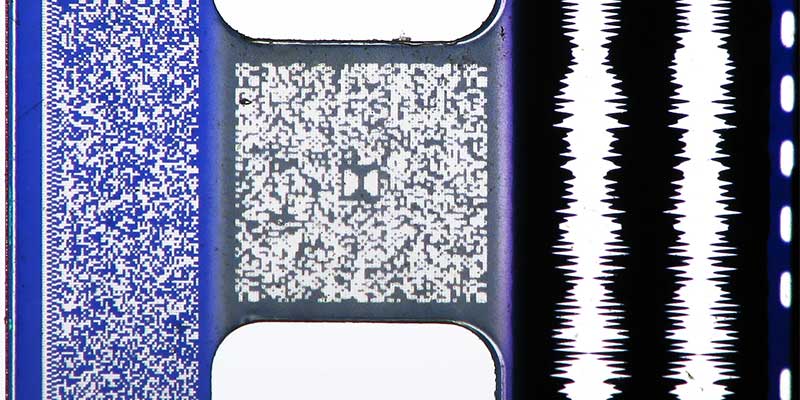

Just like video, sound comes in many flavors. Just like video, sound files can have different resolutions, bit-rates, and codecs. For high-end surround-sound configurations beyond 5.1, audio codec matters significantly. That determines how many speakers can be used and how those speakers are oriented towards the listener. Different codecs, like Dobly Atmos and DTS:X, have different surround-sound capabilities, supporting different types of hardware used in higher-end home theater systems.
Also read: DTS vs. Dolby Digital: The Better Surround Sound Format
What Is Dolby Atmos?
Dolby Atmos is a surround-sound standard that provides a three-dimensional surround-sound stage. Sounds come not just from the front, back and sides, as in a traditional two-dimensional system, but also above. This adds a third dimension of aural sound stage. In Dolby Atmos recordings, sound engineers can set the “height” of the sound’s apparent origin in space around the viewer. A helicopter coming in for a landing, a rifle shot that whizzes close to an ear, the cataclysm of a large explosion: all of the effects benefit immensely from the addition of the overhead audio channel.
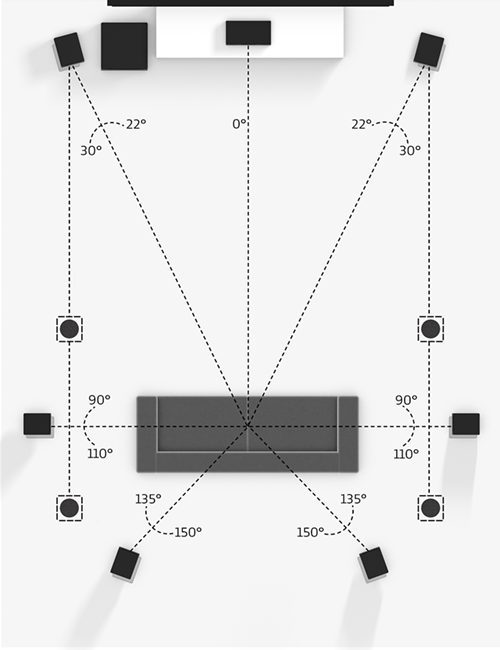
Atmos requires compatible source material, played through an Atmos-compatible receiver with a compatibly configured set of Atmos speakers. Just like with two-dimensional surround sound, your speakers need to be in logical physical positions for the sound channel they’re associated with. Try to put the top speakers as directly overhead as possible. You can also use Dolby Atmos speakers designed to shoot sound directly upward, causing it to reflect off the ceiling and sound as if it came from above. While this isn’t as reliable as a true ceiling-mounted speaker, it is more effective than it has any right to be.
When using standard sound system nomenclature, a system with seven satellite speakers and one subwoofer would be called a “7.1” system. When Atmos speakers are added, they’re added to the end of the system’s shorthand. For example, a system with seven satellite speakers, one subwoofer, and four Atmos speakers would be indicated by “7.1.4.” In fact, a 7.1.4 system is the Dolby Atmos “reference” setup, meaning that it runs natively on that speaker configuration. It can also run on 5.1.2, 7.1.2, and other specifically-supported configurations.
In addition to indicating the speaker and the standard, Dolby Atmos also describes the audio tracks that are compatible with Dolby Atmos systems. So the codec that works with Dolby Atmos speakers is, itself, called Dolby Atmos audio.
What Is DTS:X?
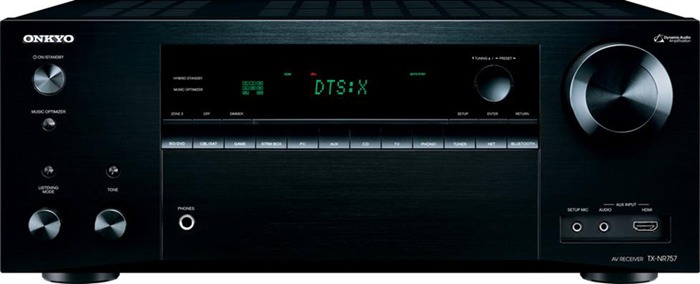
DTS:X, like Dolby Atmos, is a category of audio codecs used to save and transit recorded sound data. DTS:X has no specified sound system bed, meaning it can run on just about any mix of speakers. It uses the royalty-free Multi-Dimensional Audio (MDA) platform, while Atmos uses proprietary systems. This makes DTS:X a marginally more open system than Atmos, but that typically hasn’t had much of an impact on the eventual success of a standard.
If DTS:X has no reference speaker configuration, what do engineers mix for? First, the DTS:X receiver runs a calibration routine. This automatically detects the location and relative positions of the connected speakers. This includes speakers that are mounted on the ceiling, a new feature for the DTS family of codecs. With this self report, DTS:X can then translate the audio input into matching audio outputs.
DTS:X translates the desired point of origin in three-dimensional space into a specific set of signals for your speakers. The codec can place the sound very, very close to its intended location with nearly any configuration of speakers. This greater flexibility makes for easier user setup. It also means that sound engineers cannot place audio as reliably in the mix. Because there’s no reference system, placement must necessarily be less reproducible.
Also read: Audio Wars: Digital (S/PDIF) vs. HDMI vs. Analog
Is Dolby Atmos or DTS:X Better?
Movie theaters broadly use Dolby Atmos. Theaters have not adopted DTS:X at the same rate. This might be thanks to the standard’s second-place entry into the three-dimensional sound marketplace. Dolby’s existing market connections also made Atmos an easy product to sell to theaters.
DTS:X can be encoded with a higher maximum bitrate than Dolby Atmos. But that doesn’t make DTS:X strictly better. In audio tests, few if any listeners have been able to reliably ascertain the difference between the two codecs. In reality, the different in sound quality is likely minimal.
DTS:X could theoretically encode audio that is mathematically more accurate than Dolby Atmos. However, the listener would likely be incapable of distinguishing the difference. Dolby Atmos produces smaller files with its more efficient compressible codec, meaning more data can fit on the disk. If you can’t tell the difference, does the compression matter? That’s exactly the question the surround-sound community is attempting to answer.
Dolby Atmos does have one leg up on DTS:X – broader compatibility. Dolby Atmos users can get compatible audio from Netflix, Amazon Prime Video, iTunes, Vudu, and most Blu-Ray releases. DTS:X, on the other hand, is only offered on specified releases. There is some cost in choosing the recent addition to the market.