Women are often targeted as “prey” by sick individuals, and the sad truth to the matter is that the Internet sometimes makes it even easier to target them. This is definitely the case with a database that was discovered that listed all the personal information of 1.8 million women in China. The database even included a section called “BreedReady.”
“BreedReady” Database Leak
A white hat hacker discovered the unsecured database on Saturday, March 9, 2019. By Monday it had been taken down, but the frightening aspects didn’t go away with the removal of the database. Someone or a group of people are or were collecting a massive amount of information on nearly 2 million women.
Dutch data security researcher Victor Gevers was the first to notice the database and posted screenshots to his Twitter account. He updated it on Monday to say the database can no longer be found.
“We will keep an eye on that IP address for a while to make sure it doesn’t come back online,” he wrote. “We still do not know how [sic] the owner was or what the database was actually designed for.”
Yet by calling a portion of it “BreedReady,” it certainly sounds like whomever was collecting this data on women was doing it with thoughts of reproducing. The information on these women included their names, phone numbers, ages, birthdays, marital status, political status, and addresses. There’s even a column titled, “hasvideo,” which is even more creepy.
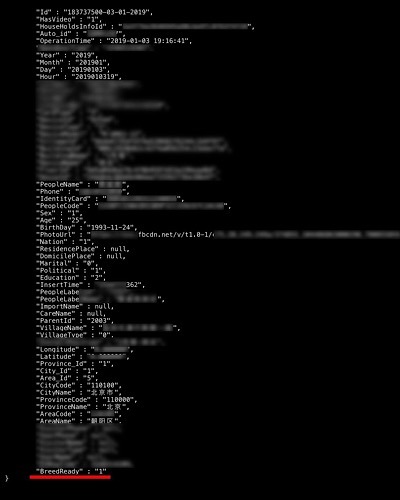
The youngest age on the overall list was 15, and the youngest on the BreedReady portion was 18. The average age of the women on the list was 32. Gevers said 89 percent were marked as single, 10 percent divorced, and 1 percent widowed.
Of course this information could be easily found on many apps that you may visit. It’s not like it’s extremely personal information. Check out your Facebook profile, and it most likely has all that information about you.
And if you’re a dating app user? You know those apps have all that information on you and more, especially with regards to being “BreedReady.”
There is also a thought that it’s a government database, especially since it’s a database of women in China, a country that has a declining birthrate. But that seems like a very Orwellian theory.
Heed the Warning
But if there’s one thing to learn from this, it’s the importance of being more cautious with the information that you leave available to others. You never know what someone is doing with that info. Is this information for a serial rapist? No one knows. We also don’t know for sure that the info was grabbed from online; it could have easily been compiled offline and then uploaded.
Does this news surprise you, or does it confirm what you have thought the whole time with regards to publishing your information online? Let us know your thoughts on this in the comments.
Image Credit: Twitter and public domain