


In the summer of 2016 Niantic created a phenomenon by releasing Pokemon GO which brought the concept of augmented reality, or AR, to the forefront of society. The game had people of all ages rushing around with their phones trying to find and collect all of the virtual Pokemon in their hometowns.
There’s been a great deal of improvement in AR in recent years. Your phone is now capable of doing what was once only possible using a headset. Pokemon GO stickers were just two-dimensional virtual stickers, but today AR has 3D capability.

What is augmented reality?
Simply stated, augmented reality creates real-world views with elements added that change the way the viewer perceives the space. Today’s AR uses the camera on your smartphone and combines interactive, digital objects with a real-life environment. AR apps allow you to add items like stickers and holograms as well as text and annotations to your surroundings.

These items don’t float above the scene they integrate into it and will stay where you put them. Even if you leave the room and come back, the virtual object will be there because it is anchored to the location of the object in real space instead of a position on your phone’s screen.
Also read: What Are Mixed Reality, Virtual Reality and Augmented Reality?
Android and Apple recently introduced AR frameworks for their smartphones. ARCore (Android) and ARKit (Apple) integrate with other AR-enabled apps to perform a variety of tasks.
Their augmented reality frameworks use three fundamental technologies that integrate virtual content with the real world using your phone’s camera:
- Environmental understanding: Lets the phone recognize the size and location of flat horizontal surfaces.
- Motion tracking: Lets the phone interpret its position in the world, including the direction it is facing.
- Light estimation: allows the phone to estimate the lighting in its surroundings.
Developers are creating new uses for these apps all the time. The apps enable you to do things like measure objects without a ruler, play games in your real space, and see how something you may want to purchase will actually look in your home. Even eBay has an app to help sellers choose the best sized box for mailing their orders by placing the object inside virtual boxes.
Of course, AR enables us to play a new generation of games by virtually placing the objects in our environments.

Getting AR for your phone
To get ARCore or ARKit on your phone, you first need to make sure your phone is compatible. The ARKit program will work with any of these iPhones running iOS 11.
- iPhone 6s and 6s Plus
- iPhone 7 and 7 Plus
- iPhone SE
- iPhone 8 and 8 Plus
- iPhone X
- iPad Pro 1st and 2nd Gen (all sizes)
- iPad (2017 and 2018)
Android phones that are capable of using ARCore are shown in the chart below:

Check here to see if any new Android devices were added recently.
With an Android device you will need to download the ARCore app from Google Play to use any of the available AR apps.

You may also need to download the AR Stickers app, but if that is necessary, there is a note in the description to inform you of that.

Also read: Augmented Reality vs. Virtual Reality: What’s The Difference?
What apps should I try?
Some of the most popular AR apps are available on both platforms. These include Ikea Place and Amazon ARView. These apps allow you to see a product in your real space before you purchase.

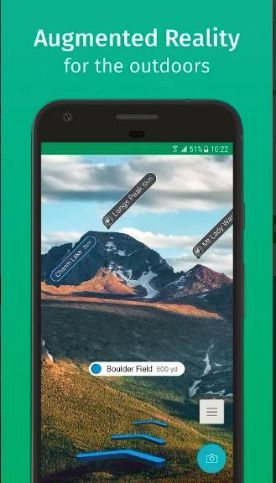
Other well-liked apps for Android include AR Stickers, AR Mole (a virtual Whack-a-Mole game) and ViewRanger – Hiking Trails & Bike Rides.
Some of Apple’s popular apps are Fitness AR, EasyMeasure, and ShARk (an app that puts sharks in your environment for you to interact with).

With the arrival of augmented reality for smartphones, the tech companies provide us with a variety of apps that are both practical and fun! There are still bugs in some of the apps, but many of them work great already, and there will be more quality apps to come.