

Before the digital revolution, if you wanted to know the name and artist of a song, you would have to hope the radio DJ would announce it the next time you happened to hear it on the radio. Times have changed, and now Shazam (renamed Music Recognition in the soon-to-be-released iOS 18.2) will do more than tell you the name and artist of a song – it can now tell you when and where you identified a song.
New Music Recognition Skill
You may not have ever explored Shazam or Music Recognition that deeply. Perhaps you just ask it to identify a song, then you’re done with it. But it keeps a history of songs you’ve identified and gives you further information, other than just the title and artist.
From the Control Center on your iPhone or iPhone, you can learn the album name, the lyrics, watch the video, listen to it in Apple Music or Spotify, etc. It was always a great feature, even before Apple acquired it. But Apple has continued to improve it.
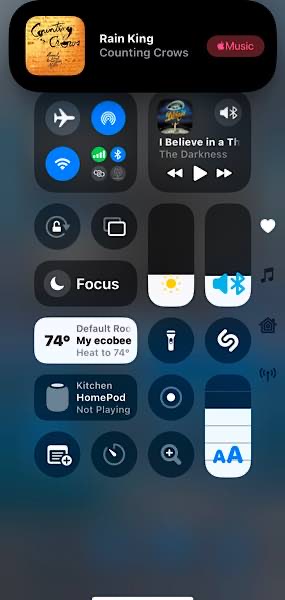
This is all helpful information. For example, if you want to check the lyrics, you can ask Music Recognition to identify it, and check the lyrics there, instead of going into your browser and searching for the lyrics or opening the Apple Music app and playing it.
But now when you “Shazam” a song, it opens a new page with just about everything you’d want to know about a song. You can learn about the next concerts by the artist, their top songs, the album the song is from, similar songs, and track information, as well as the date you identified the song and the location.
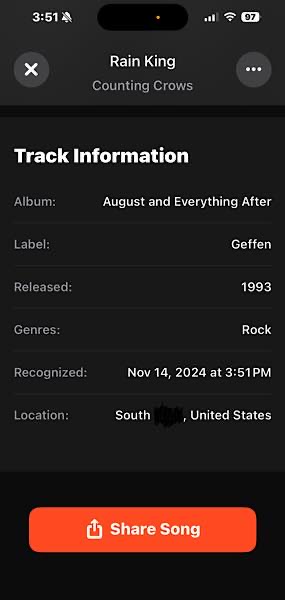
My favorite way to use Music Recognition is while I’m driving. I have it on my Apple Watch watch face, and when I hear a tune I like on the radio, I can just “Shazam” it. It shows me what it is at that time, but more importantly, since I’m driving, Music Recognition will record it in my history, for me to look up later when I’m at home. It will be interesting to see if it will identify the location where I was driving at the time it identified the song.
New Skill Too … New
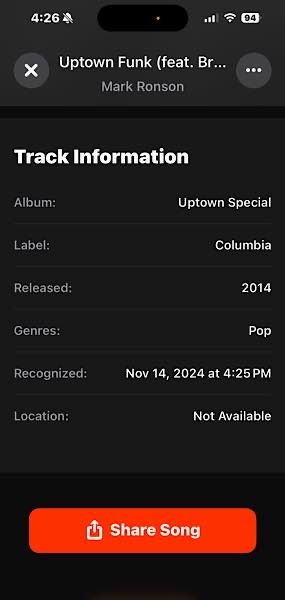
I’ll add that this is a feature in iOS 18.2, which won’t be released until December 2. I’m accessing it through public beta. And like many things in betas, showing the location where you identified a song is kind of spotty.
I’m sitting at home on my couch paying music on my iPad, so there’s no reason Music Recognition should have a hard time identifying the location. I’ve Shazamed a handful of songs, and some of them show the location as “Not Available.” But again, this feature is still in beta. It looks like they still need to work on it a little bit.
What would really be great would be for this feature to work with Siri. You can ask Siri a specific question about photos, such as showing you a photo taken on this day, of this person, at this location, etc. It would be great if you could ask Siri for the name of the song you recognized the last time you were at a local pub, while driving, etc.
It would eliminate the times you ask your friends and family, “What was the name of that song I looked up about a year ago when we went to the Downtown Pub?”
It makes me think that Siri integration is on the horizon at some point. It would improve the helpfulness of Music Recognition identifying the location tenfold. Read on to learn about a possible new feature coming later in iOS 18.2: learning how long you have to wait for your iPhone to charge.
Image credit: Unsplash. Screenshots by Laura Tucker.