It’s easy to be using your Wi-Fi signal from your home, then move outside and realize you just lost your signal, such as out in your garage or out in your backyard. Leave for a walk, and forget it — you’ve dropped your network. Amazon Sidewalk aims to change that with a goal to create a low-bandwidth IoT network that will move beyond your existing Wi-FI network.
What Is Amazon Sidewalk
Amazon Sidewalk was announced in 2019. It uses a small bit of your existing Wi-Fi bandwidth to send wireless low-energy Bluetooth and 900MHz radio signals between compatible devices further than what Wi-Fi is capable of sending. Amazon claims the service will be able to extend up to half a mile.
You’ll share your bandwidth with your neighbors, which will create a network or the neighborhood’s networks. Your outdoor devices will be able to stay connected. As an example, if you have a tracking device on your dog, when it runs away, you’ll be able to find it more easily.
Amazon is setting up its devices to pull small amounts of your home’s bandwidth to use with Amazon Sidewalk and Bluetooth Low Energy. The 900MHz band it uses will allow for a range of up to half a mile.
“BLE is used for short-range benefits such as simplifying new device setup or helping your device reconnect at short range when it loses its Wi-Fi-connection,” explained an Amazon spokesperson. “Sidewalk uses the 900MHz spectrum to extend the low-bandwidth working range of devices and help devices stay online even if they are outside the range of their home Wi-Fi.”
Security and Privacy
There are, of course, security and privacy concerns. There are with current Amazon service with the Ring and Echo devices, so there’s no reason why there should be fewer concerns now. Once your network is extended, you will be sharing more.
However, Amazon is trying to confront those concerns before the release of Amazon Sidewalk. “As a crowdsourced community benefit, Amazon Sidewalk is only as powerful as the trust our customers place in us to safeguard customer data,” wrote Amazon in a white paper explaining privacy and security steps it would take.
Amazon compares itself to the postal service. It processes the data of the devices and sends it to the application server. It further explains the post office doesn’t get to read your mail, only the envelope.
Amazon Sidewalk will be the same. “Information customers would deem sensitive, like the contents of a packet sent over the Sidewalk network, is not seen by Sidewalk,” wrote Amazon. Only the intended destinations are allowed to access that information. Owners of Sidewalk gateways won’t be able to access data from the endpoints that use their bandwidth, and endpoint users do not have access to the gateway information.
Amazon also promises to delete all information that is used to route each packet every 24 hours and will use rolling device IDs to ensure data across the Sidewalk network won’t be linked to specific customers. Additionally, it looks like Amazon device owners will be able to turn Amazon Sidewalk off.
Devices that Will Work with Amazon Sidewalk
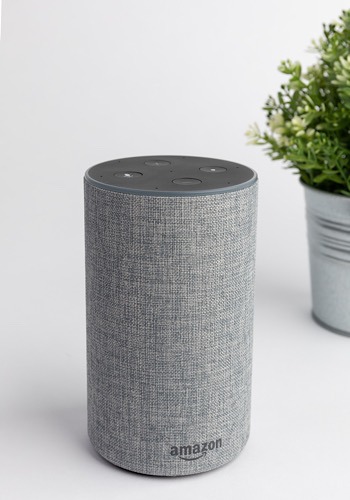
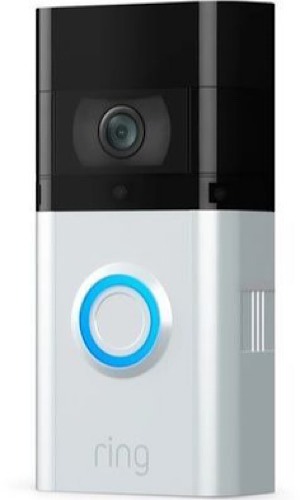
Just about every Echo and Ring device will work with Amazon Sidewalk but not to its full capacity. The only ones that will be equipped to send long-range low-bandwidth signals on the 900MHz band are the new spherical Amazon Echo and Echo Show 10. The Ring Floodlight Cam and wired version of the Ring Spotlight Cam will service as Sidewalk bridges that use the BLE and 900MHz band.
Most of the other Echo and Ring devices will only use Bluetooth LE for short-range Sidewalk transmissions. They will help you pair your outdoor devices but won’t extend the Wi-Fi range of your home to go around the block.
Tile is working on a new tracker for the Sidewalk platform, meaning there will probably be other manufacturers that will follow suit, depending on the popularity of Amazon Sidewalk.
If the whole idea of this project has you a little nervous, read on to discover five Amazon Echo alternatives with smarter features.
Image Credit: The Verge via Zatz Not Funny and public domain