

Picture this: You wake up one morning and have to go to work. While grabbing the stuff you need before you leave, you notice that you forgot to charge your phone’s battery overnight. It is at this point when you realize that you have two choices: Either you hope that the charge left on your phone is enough for a work day, or you end up going an hour late for work. Why do batteries take so long to charge? If you’re not asking this question at some point in your life, then you’ve already been accustomed to charge times to the point where you don’t feel such a need. In this article, I intend to answer it.
A Word on Battery Capacity and Amperage
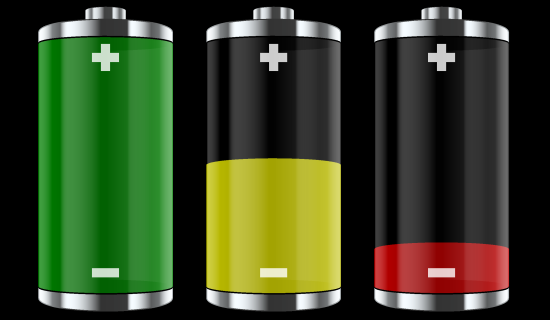
The word capacity is usually used to quantify how much electrical charge one battery can hold. It is usually measured in amp-hours, (Ah) and in the case of phones, milliamp-hours (mAh). The typical phone will be able to hold up to 3000 mAh of charge. To a person who doesn’t know any better, it is easy to assume that you can take this battery and charge it in half an hour by applying 6 continuous amps of power.
The logic behind this is that a battery with a capacity measuring 3000 mAh (or 3 Ah) can theoretically provide 3 amps of power for one hour. Since charging is just the reverse of emptying a battery, you can (in theory) charge a 3000 mAh battery in just half an hour by applying 6 amps of power. In reality, if you try this, your battery will release nasty gases and possibly explode. In the best case scenario, it simply won’t charge at all if it has a protection mechanism against excessive input power.
So, Why Can’t Batteries Charge Faster?
It all has to do with chemistry and electrical impedance. Lithium-ion batteries aren’t able to tolerate very high amperages. Charging a typical phone battery with more than one amp of power may lead to permanent damage or, even worse, something called thermal runaway.
Thermal runaway is exactly like it sounds. It’s a chemical reaction that causes a thermal increase in response to another thermal increase that was previously initiated. Once a battery’s heat threshold has been exceeded, it will likely go through a runaway process, heating up continuously until it either combusts or completes the reaction.
When charging batteries, you may notice some heat building up on the units. This is because of the battery’s natural impedance. This happens because not all of the electrical charge applied to the battery actually translates into added capacity. In other words, the energy going into the battery is never fully used. Some of it will transform into heat. The more current you apply to the circuit, the more heat builds up as the battery charges. An excessive amount of heat will either cause thermal runaway or degradation (the battery will not fully charge anymore).
If you have a battery that charges very slowly and dies very quickly, consider trying to reduce the continuous demand for power on the device. In phones, stop all running applications, or simply restart the phone. If this doesn’t work, and two years have passed since the manufacture date of the battery, consider replacing it. The last thing you want to do is try to use “tricks” that will make the battery charge faster by applying more current.
If you want to learn more about the battery charging cycle or simply want to add your thoughts, please leave a comment below!